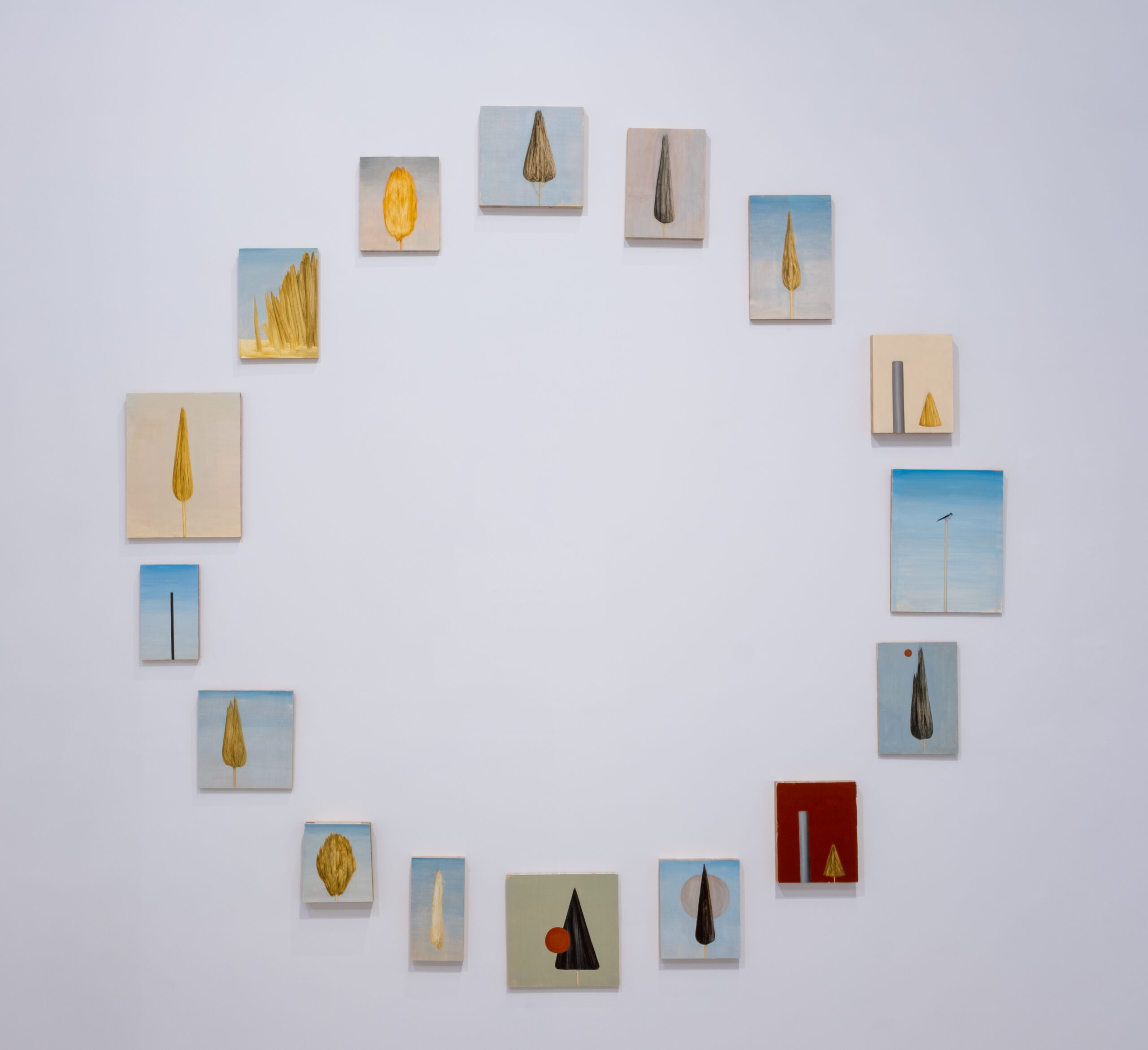
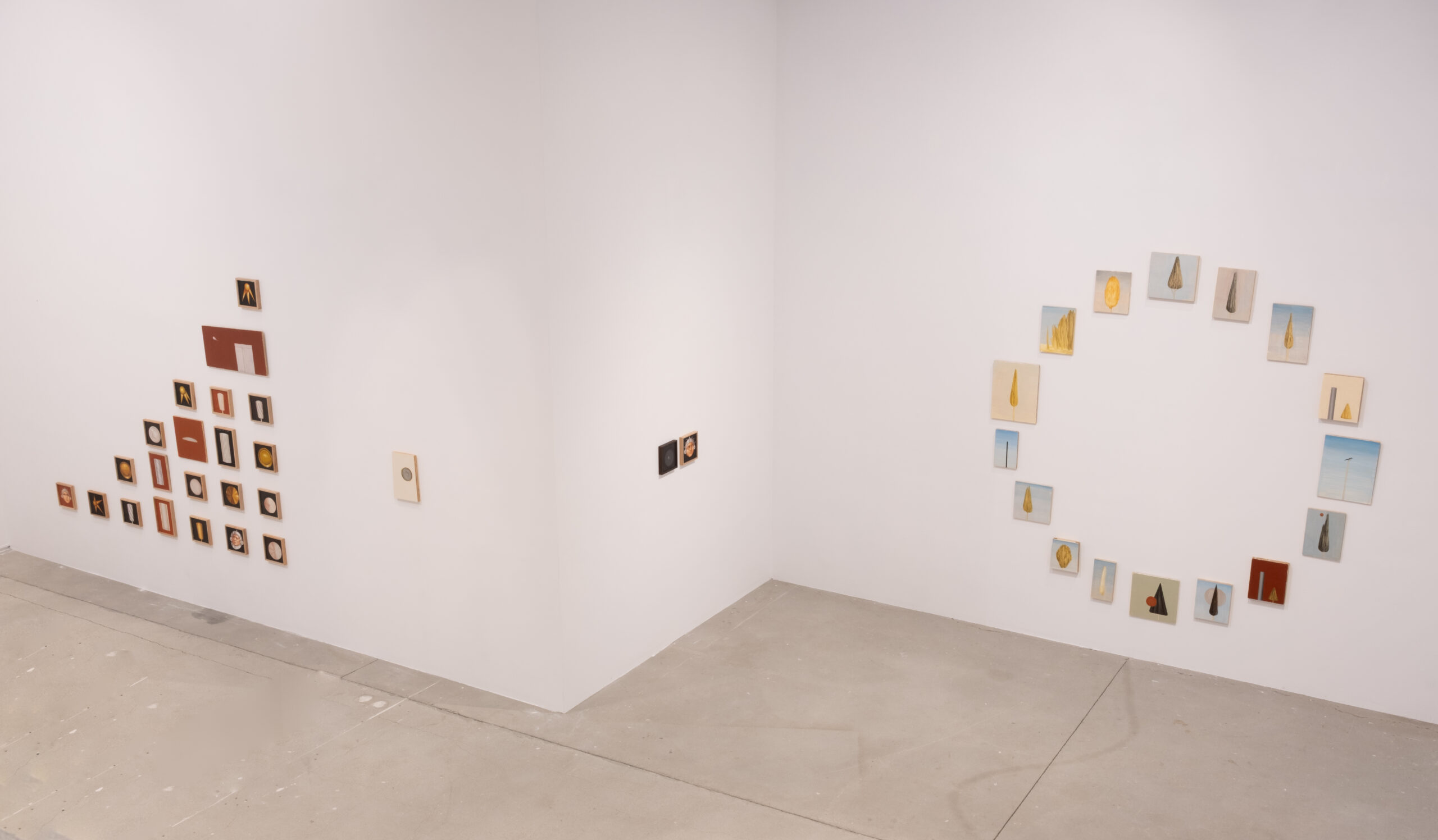
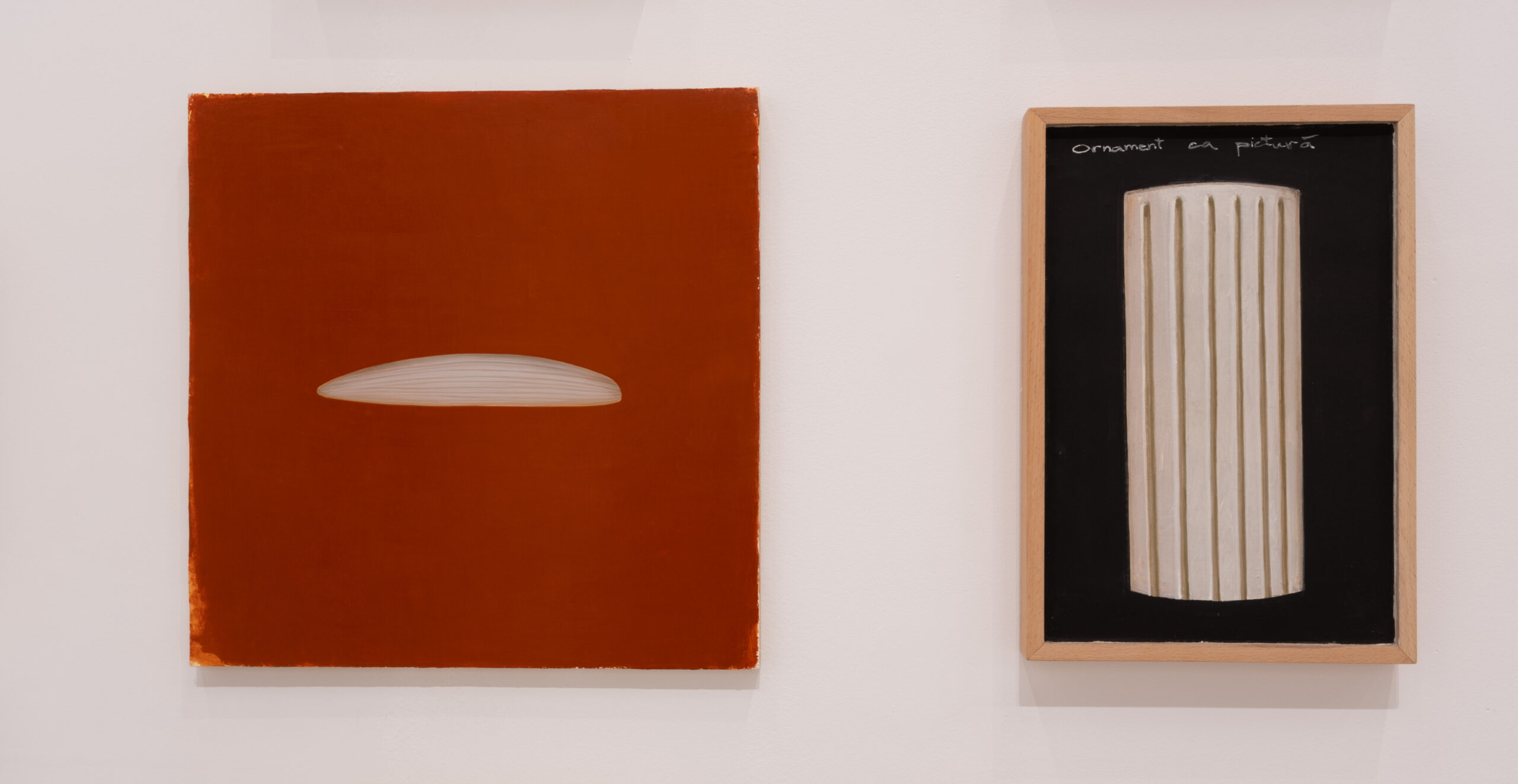
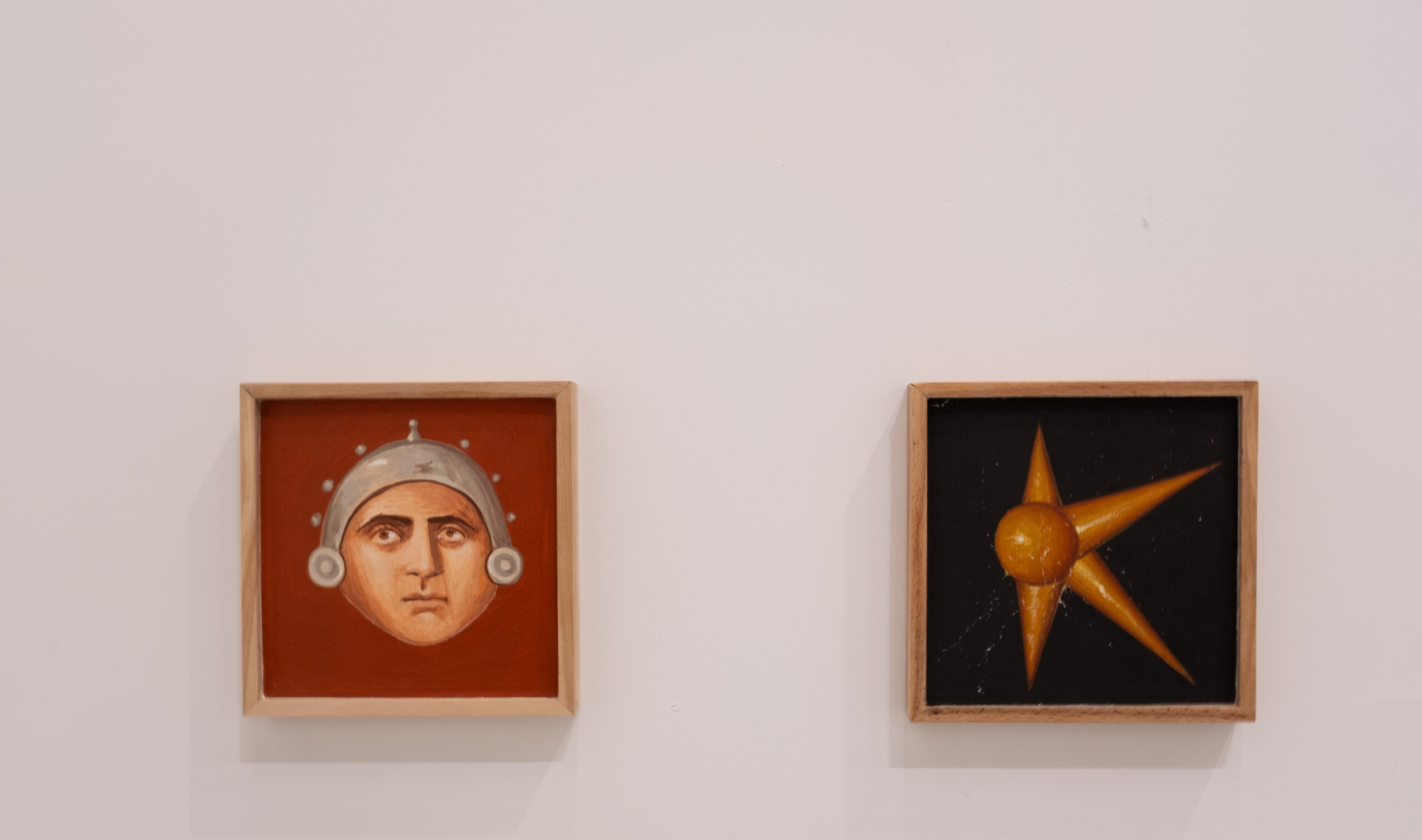
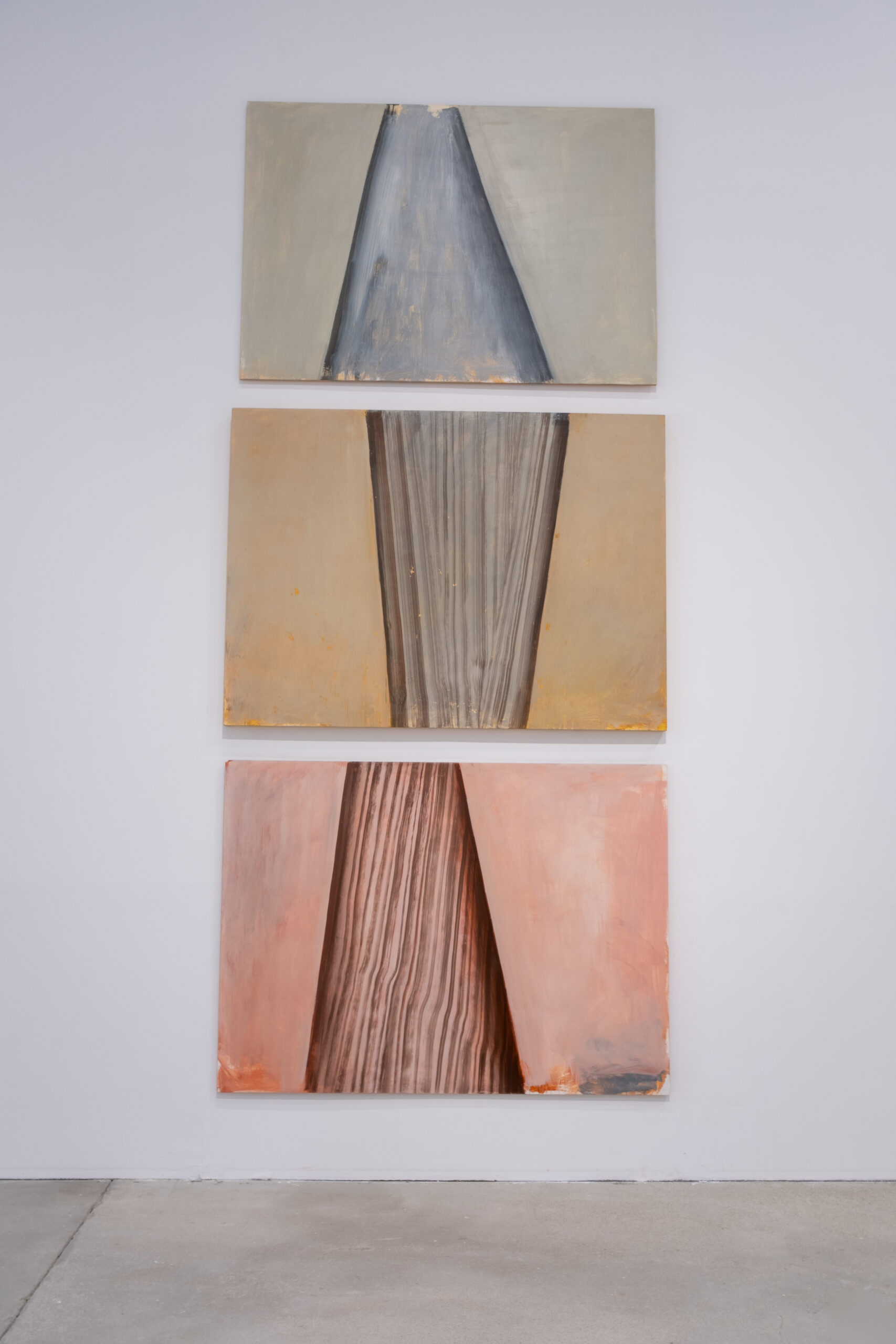
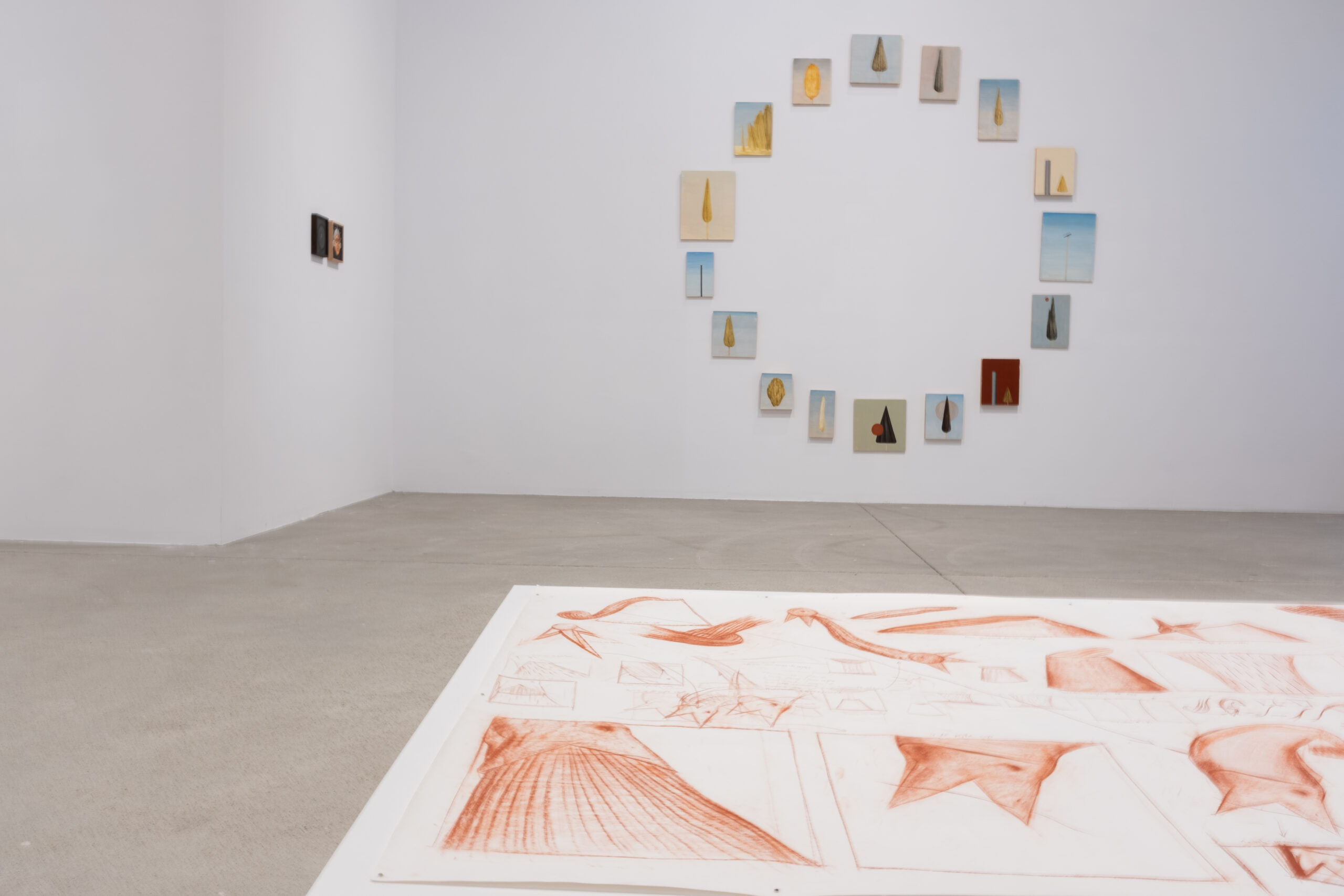
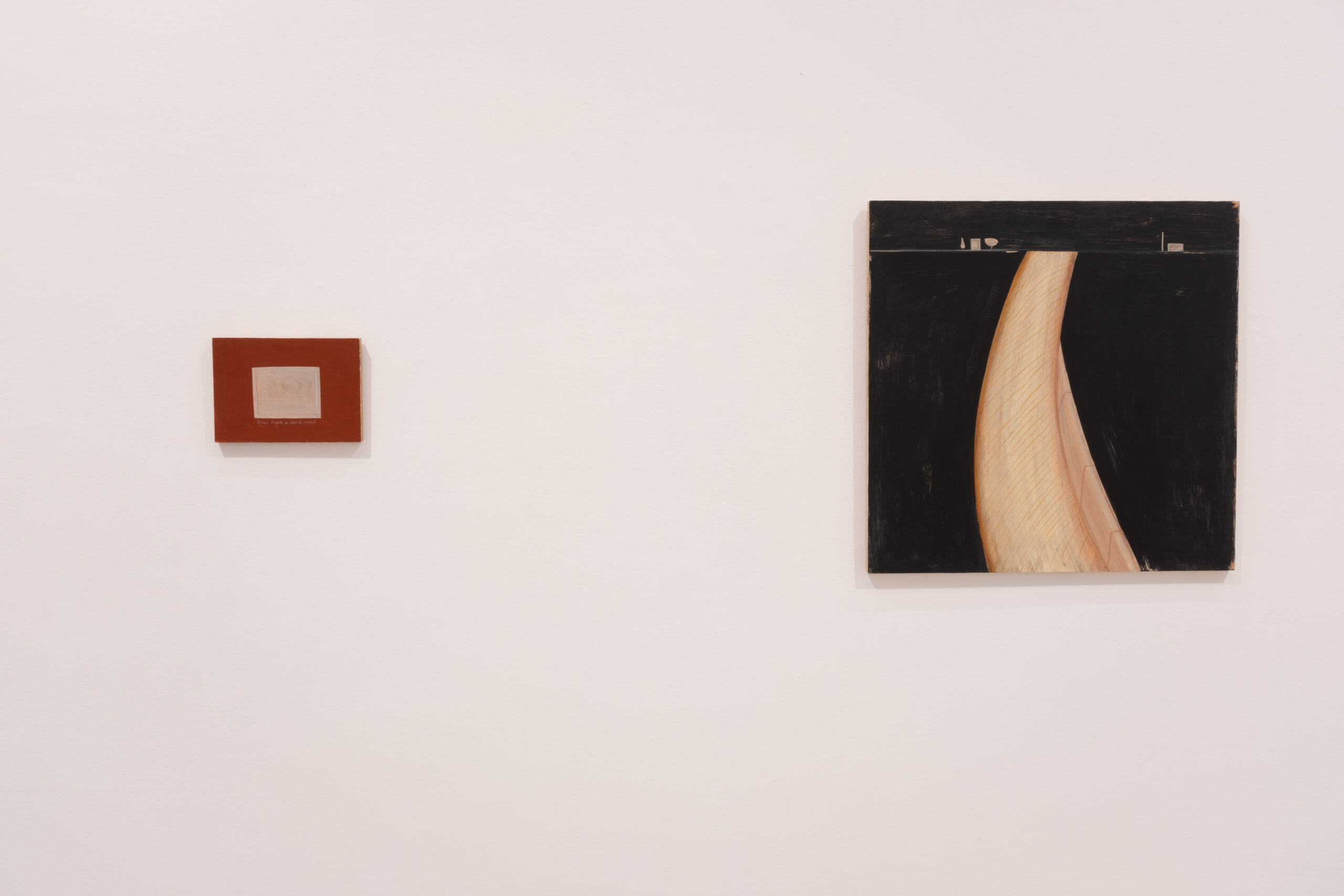
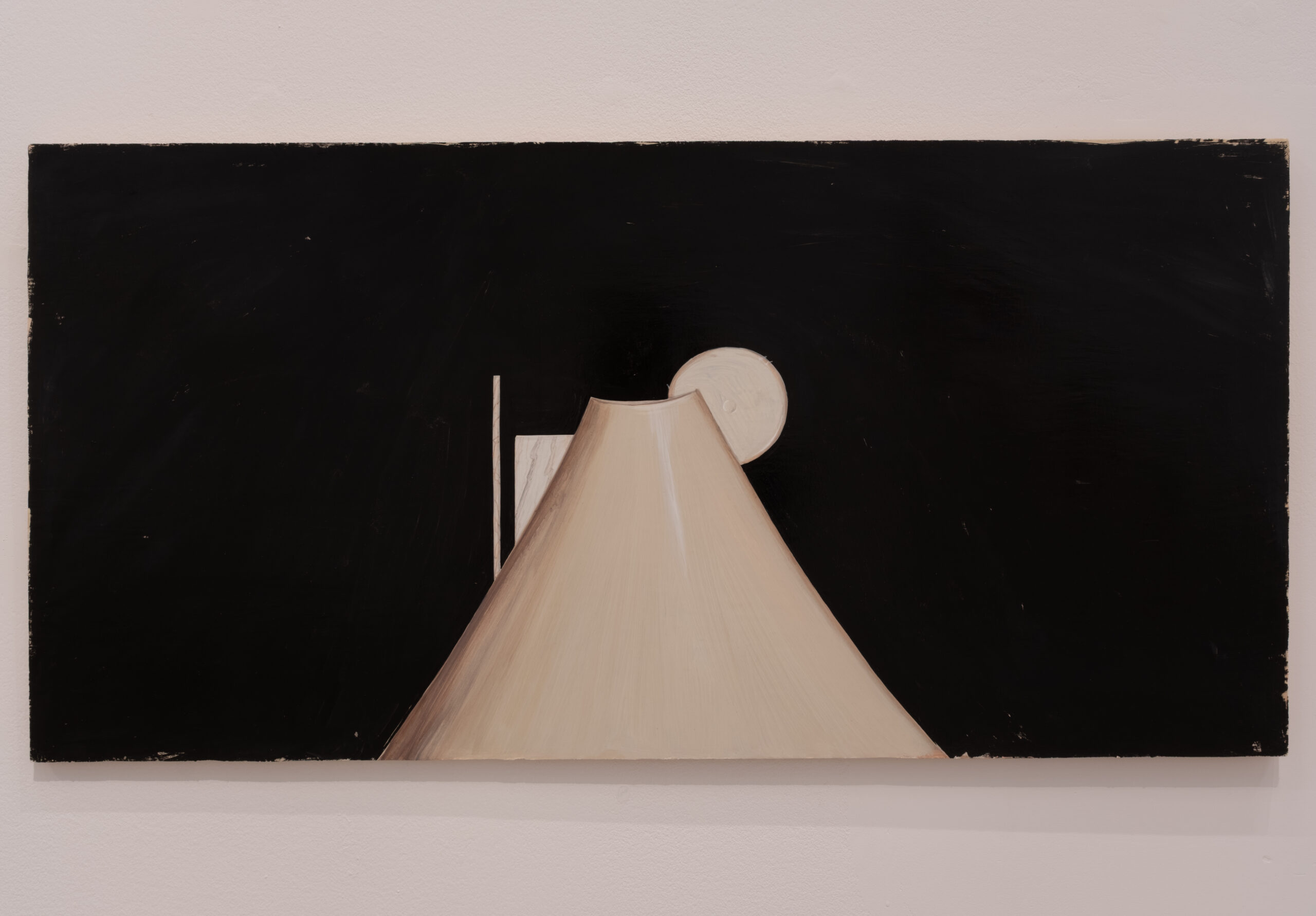
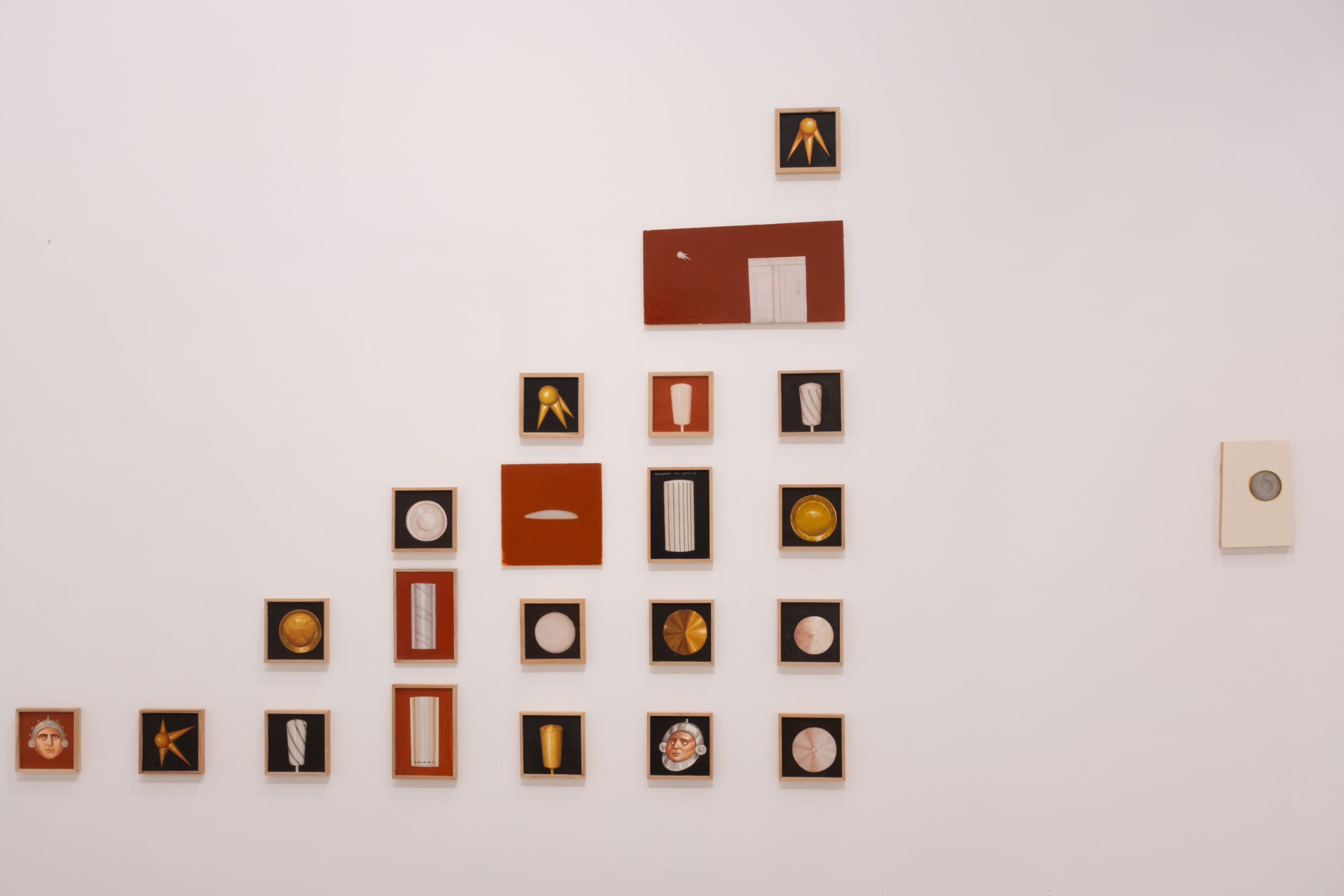
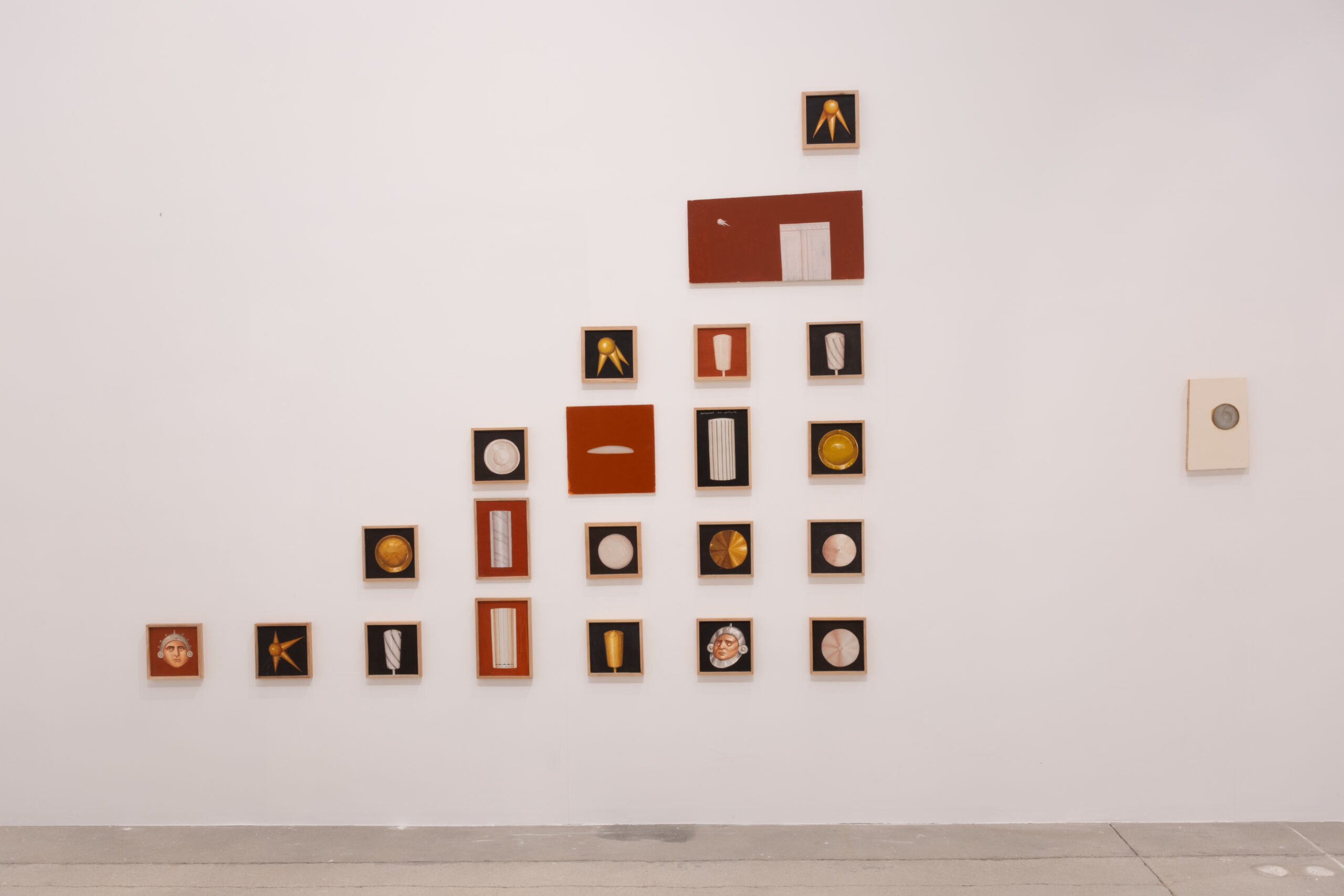
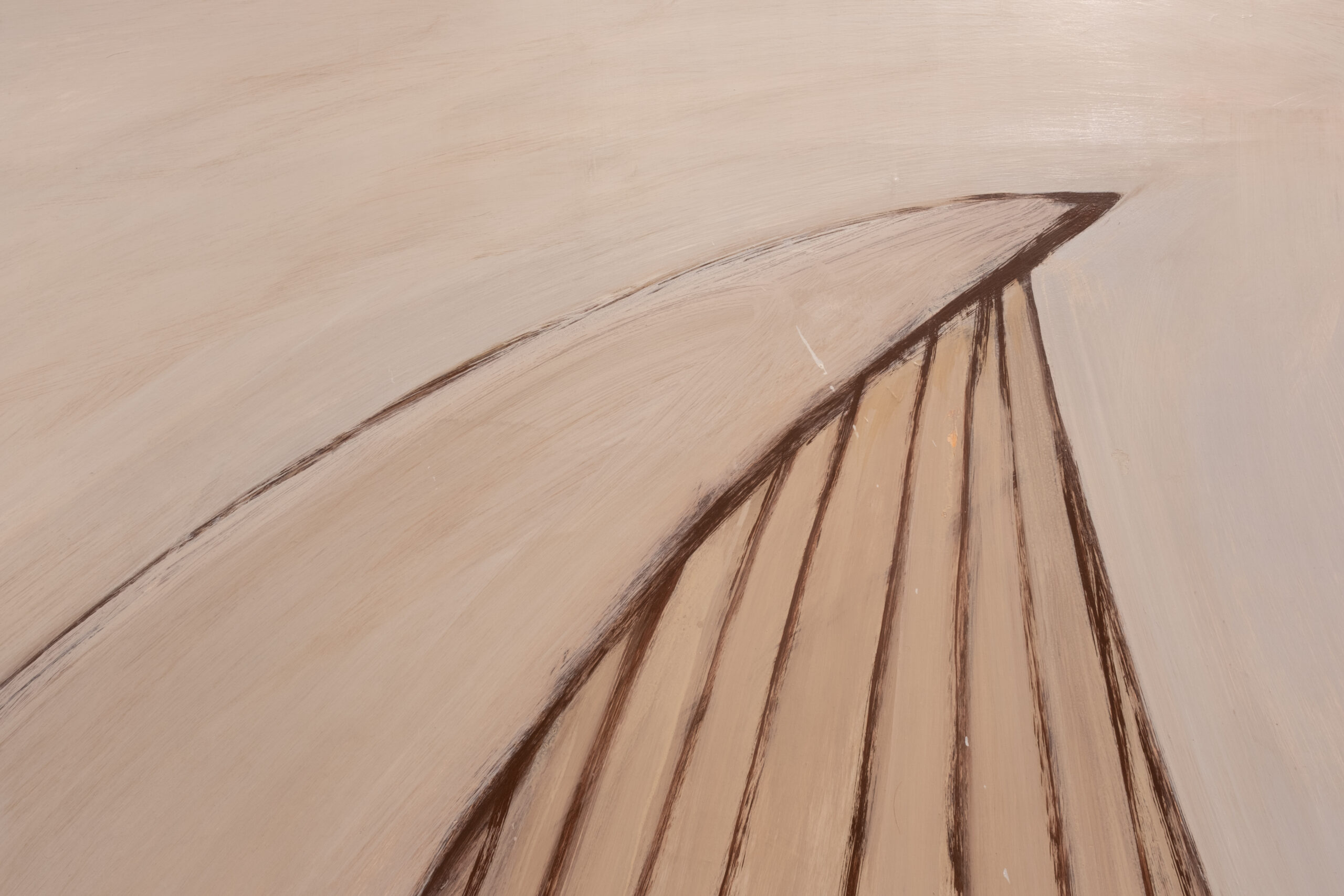
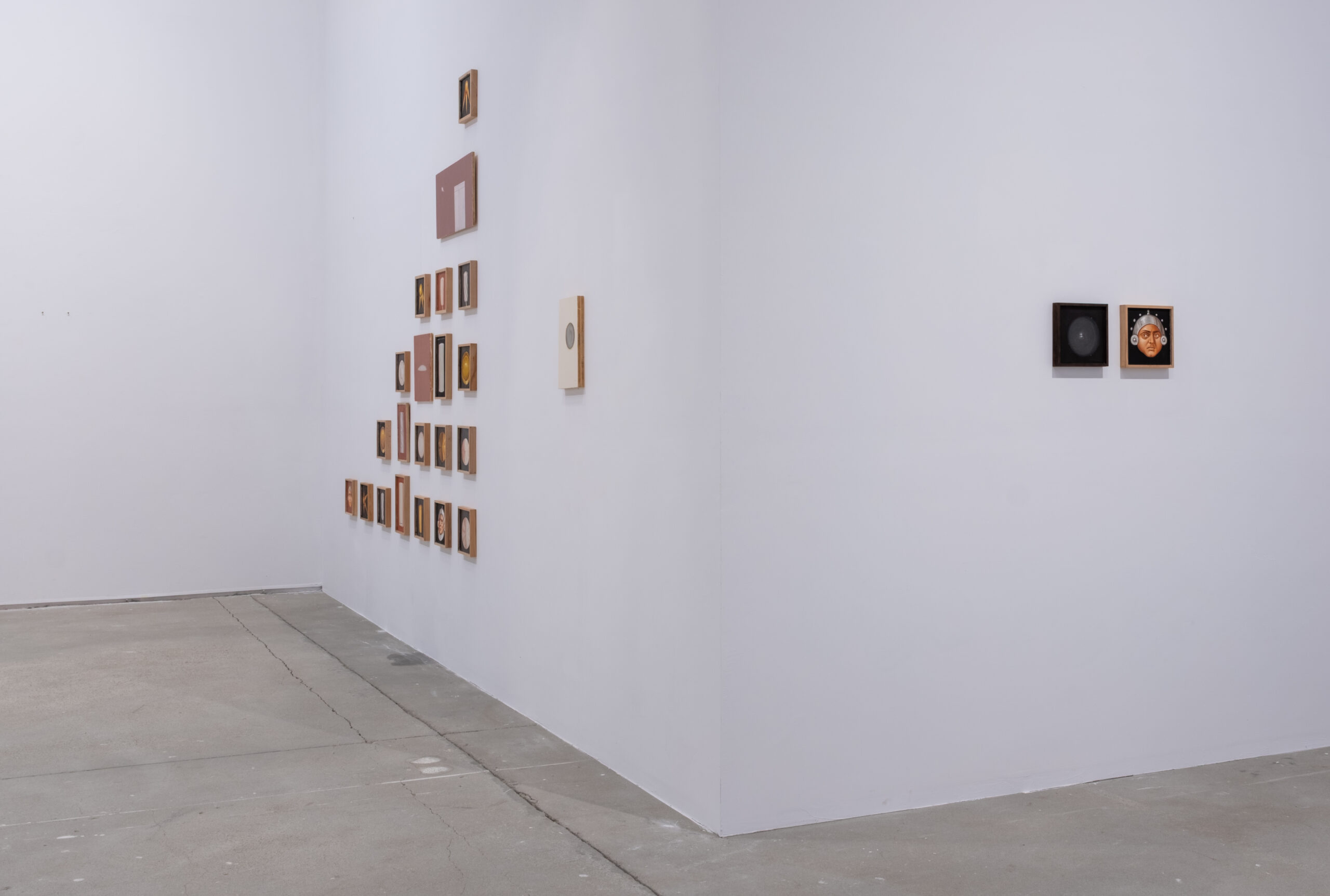
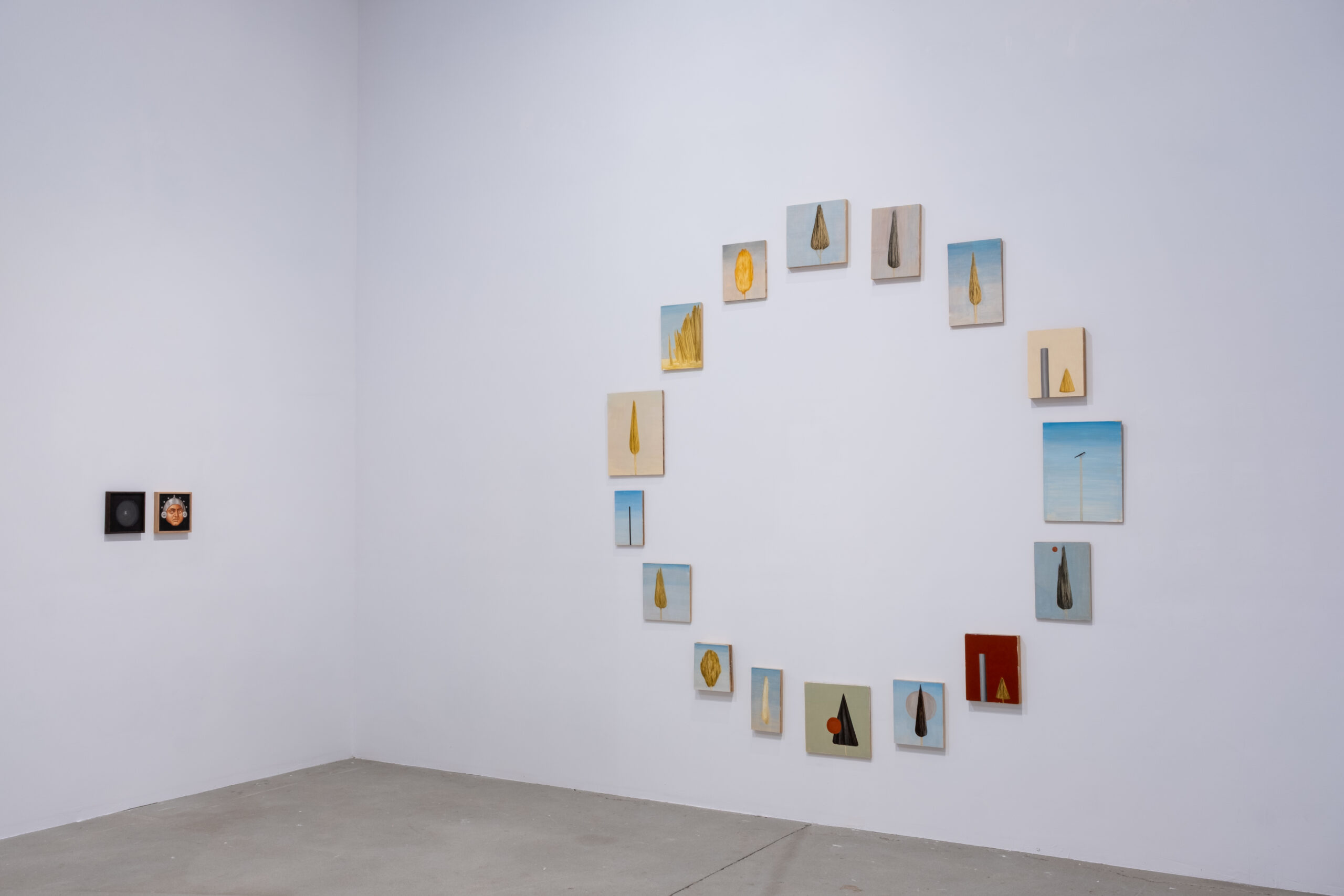
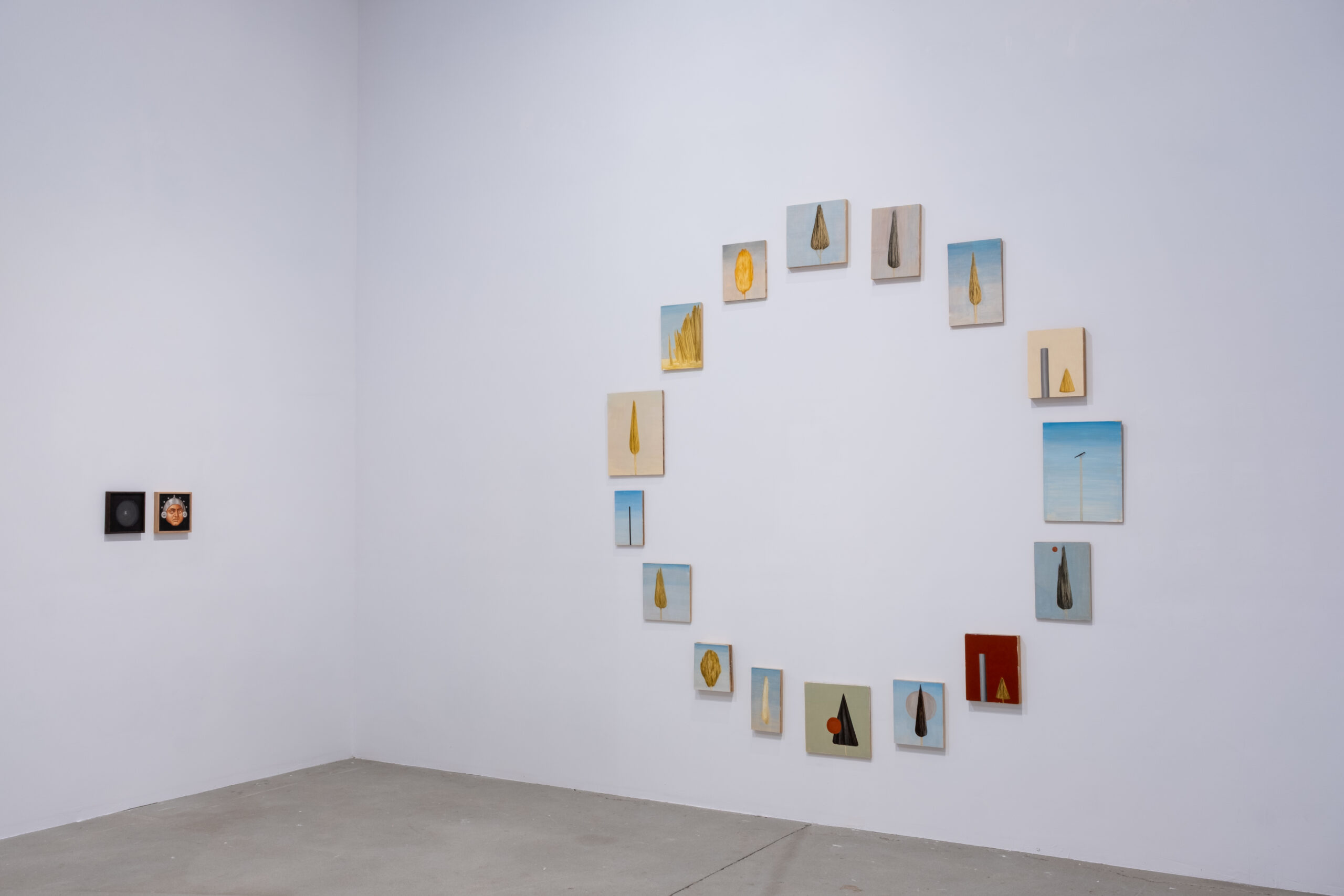
The title plays a crucial role in the decoding of the image, producing lexical sequences that can be divided into two major structures: image–word (plant, water, planet, void/air, bulb, ornament, astronaut, etc.) and image–statement (Lightning above the river, Water in a circle, Water in the sky, Water in the sky at sunset, etc.). These statements amplify morphological diversity while simultaneously acting as catalysts for new configurations of visual information.
In the case of these works, the reading of the image calls to be doubled by the reading of the title, a process through which the reality encoded by the pictorial act becomes clarified. The dialogue between viewer and image emerges through a moment of delay or dwelling, a temporal suspension that activates and deepens the interaction with the painted surface.
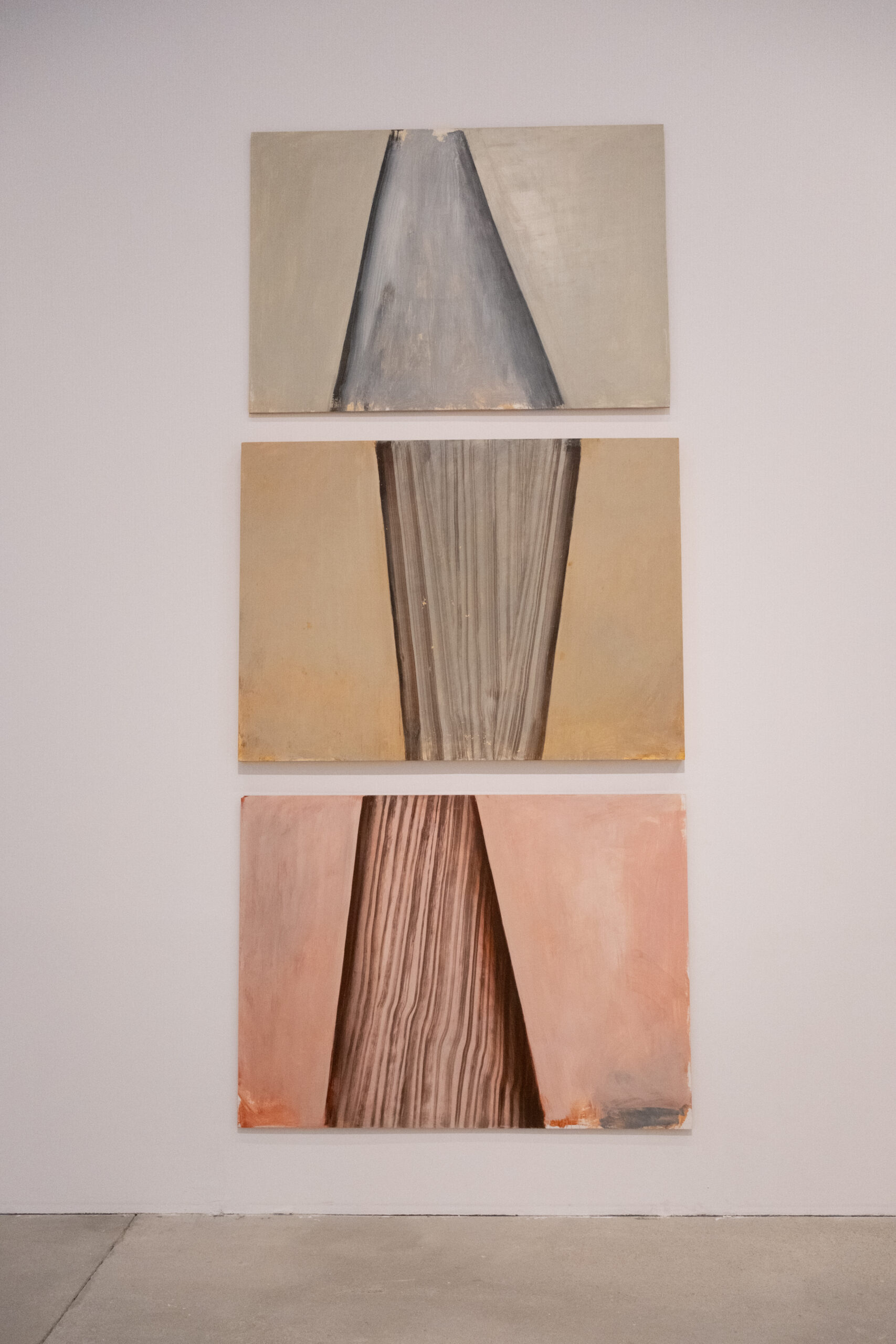
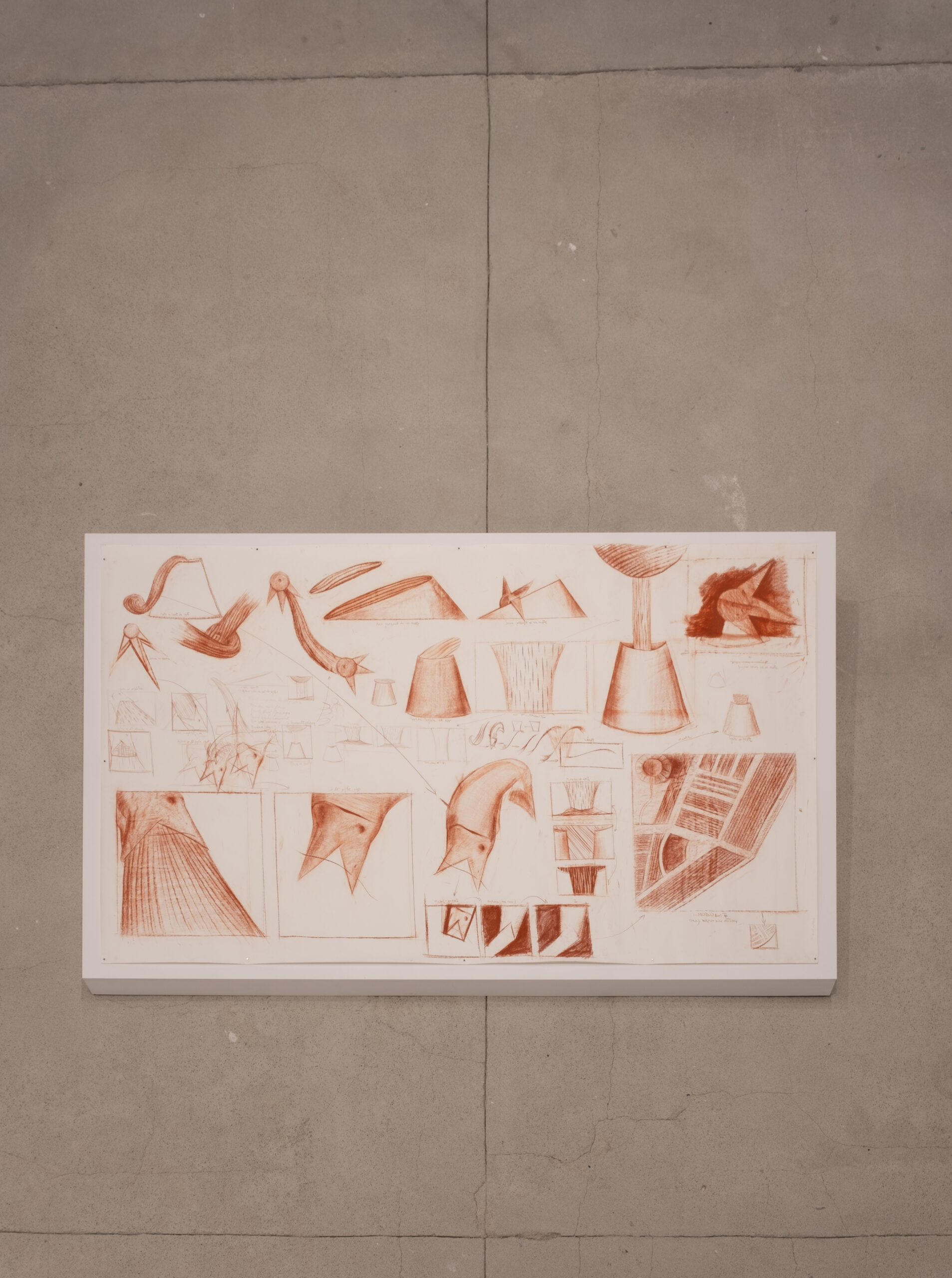
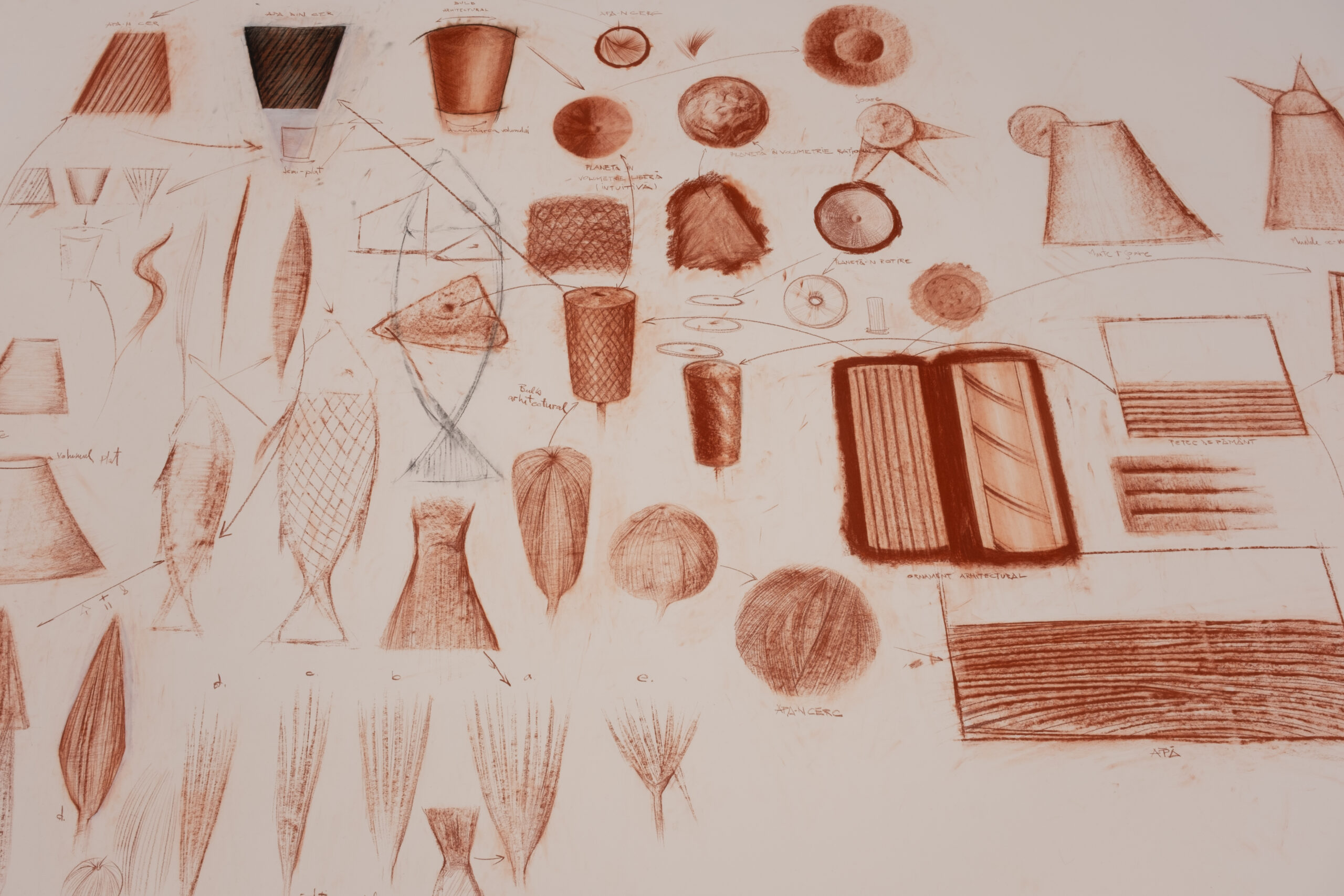
The fluidity of forms characterizes the artist’s practice. While this condition is clearly legible within the internal derivations of each series, it remains equally visible in the inter-serial space. One can thus identify a diagrammatic dimension, through which form undergoes mutations from one series to another, while retaining traces of prior structures, articulated through pictorial processes specific to each medium employed. The character of the painted or drawn image emerges from a symbiosis between tetracromy and the particularities of media such as fresco, egg tempera, or charcoal drawing. This synthesis reinforces a reductive paradigm intrinsic to these images, while also aligning them with the architecture of haiku poetry—a form that seeks to articulate multiplicity through minimal means.
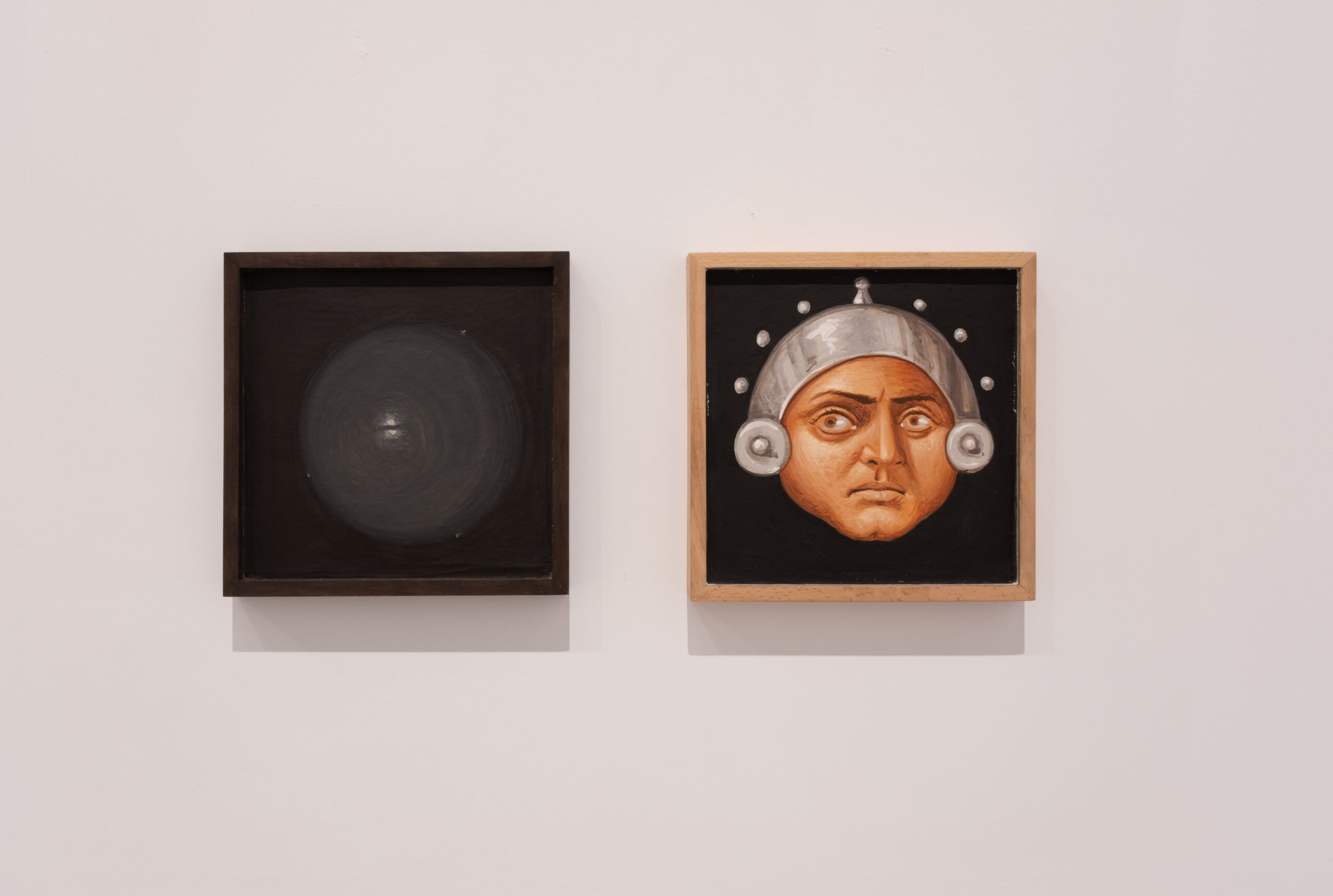
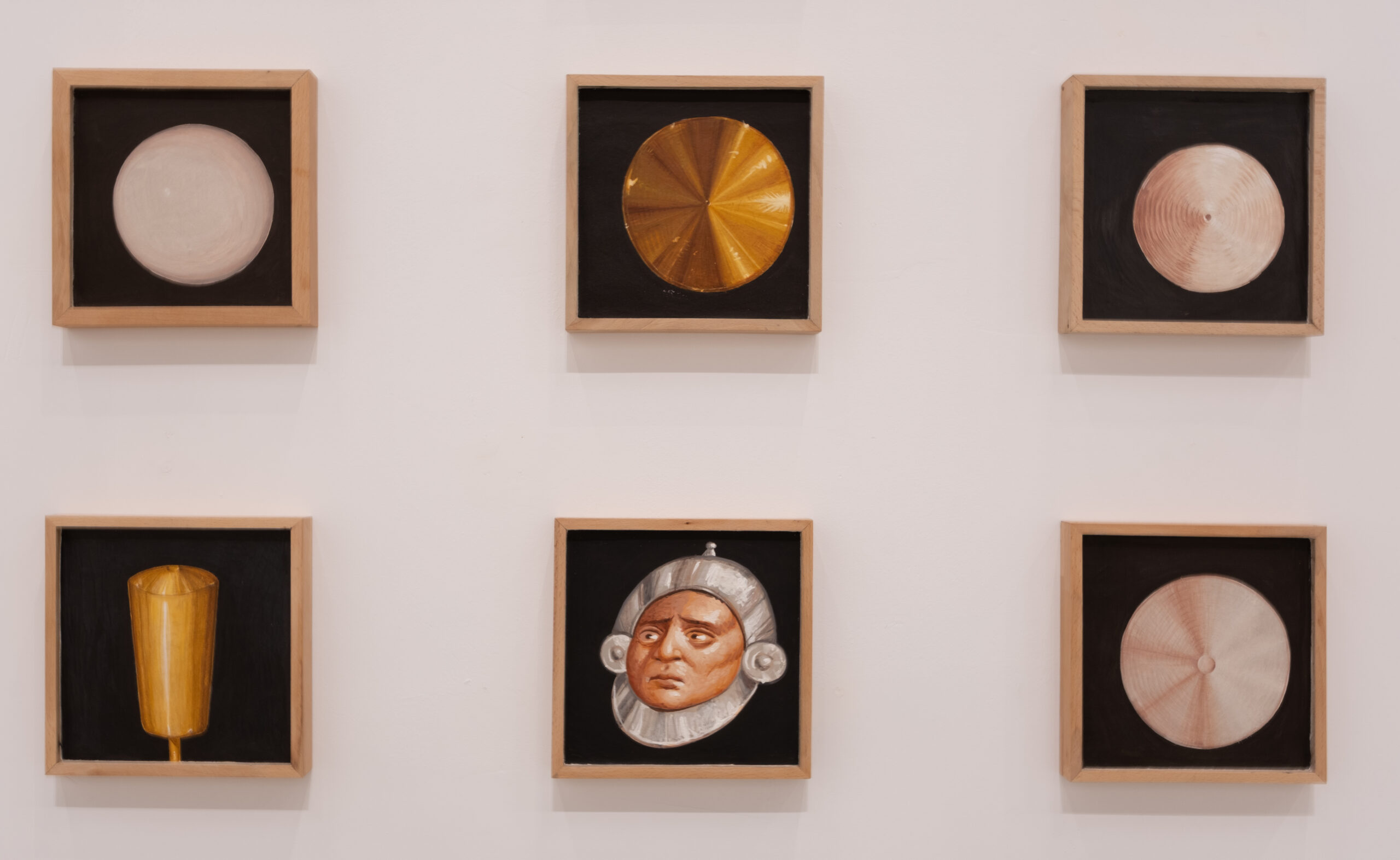
Forms are simplified, aided by the rapidity of the pictorial act as conditioned by the medium—most notably in fresco. Popăilă describes them as forms “purged of verbose indications or ornamental excesses unnecessary to the final image, which would otherwise produce a facile delight for the eye, enchanting it in a negative sense and, through it, numbing the viewer’s mind.”
The imaginative play underlying the paintings often intersects with citations from Roman fresco, one example being the transformation of medallions (phalerae) into planetary forms, where the circle—an originary geometric structure—serves as a generative base for subsequent themes. In this way, imagination—emerging from within the lists of titles, the primary source of Popăilă’s painting—constructs contexts grounded in the refusal of pre-established pictorial conventions, often crystallized around the question “What should I paint?” Instead, it foregrounds an inquiry into the pictorial act itself, drawing from the latent possibilities contained within its own nucleus.
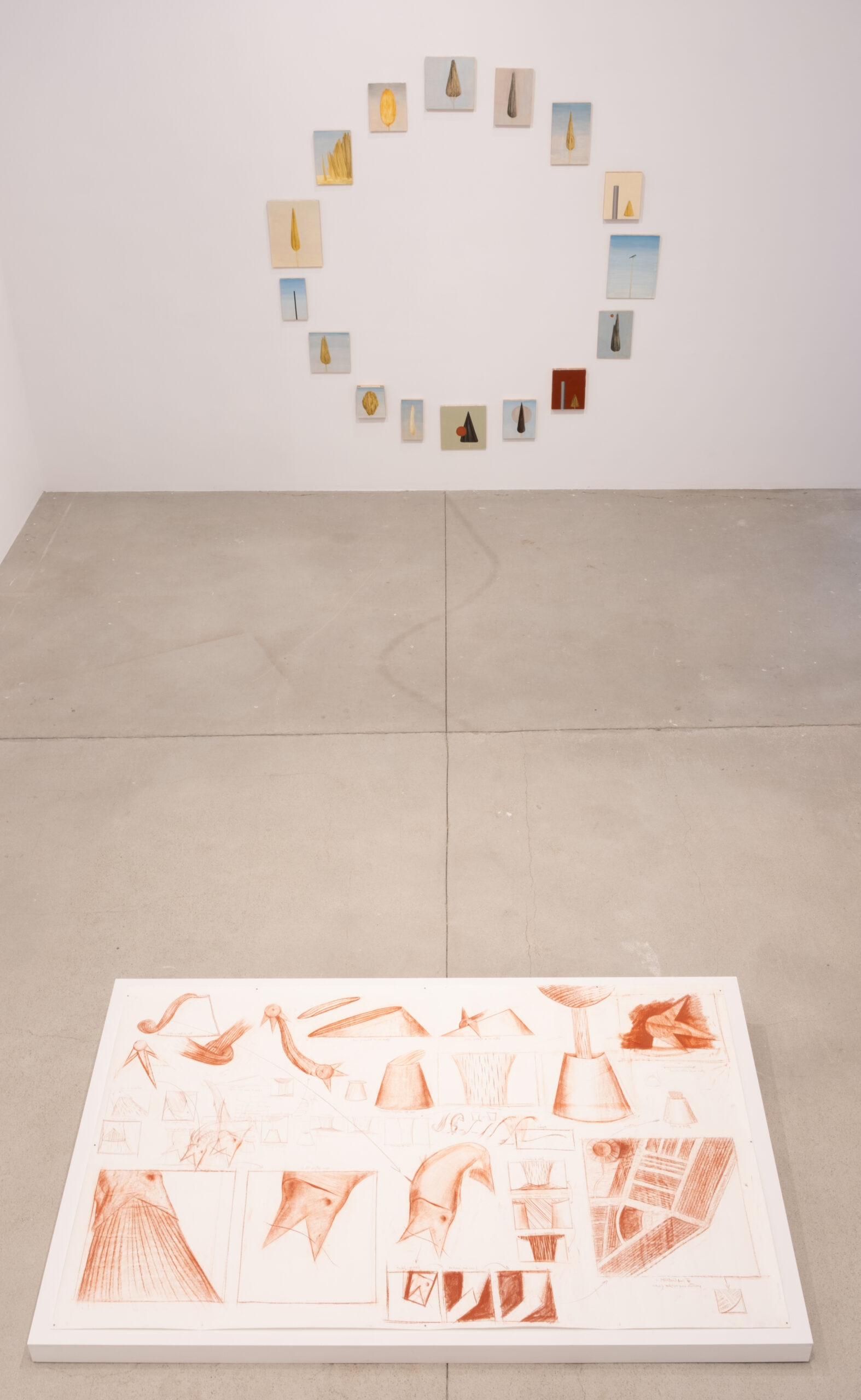
The two drawings conclude the exhibition trajectory while also offering a schematic insight into the generation of visual ideas. Within them, one perceives a method shaped by the porosity of charcoal, operating within a chromatic range akin to that of parietal or cave imagery. This method becomes generative of new morphological pathways through which Lucian Popăilă continues to explore possibilities within his own visual field